CERT
Community Emergency Response Team Training
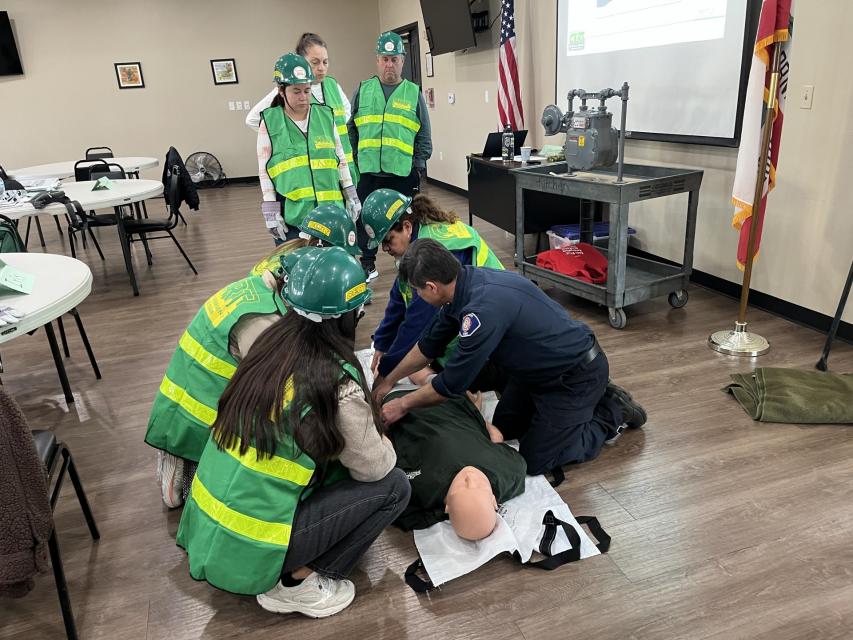
The Community Emergency Response Team (CERT) Training Program educates individuals on disaster preparedness for hazards that may affect their area and provides training in essential disaster response skills, including fire safety, light search and rescue, team organization, and disaster medical operations.
Through the knowledge gained in the classroom and hands-on exercises, CERT members are equipped to assist others in their neighborhood or workplace after a disaster, especially when professional responders may not be immediately available. CERT members are also encouraged to take a more active role in supporting emergency response agencies and participating in emergency preparedness projects within their communities.
CERT Training is free of charge and consists of a three-day course, available in March and September 2025. Please see the schedule and class locations below.
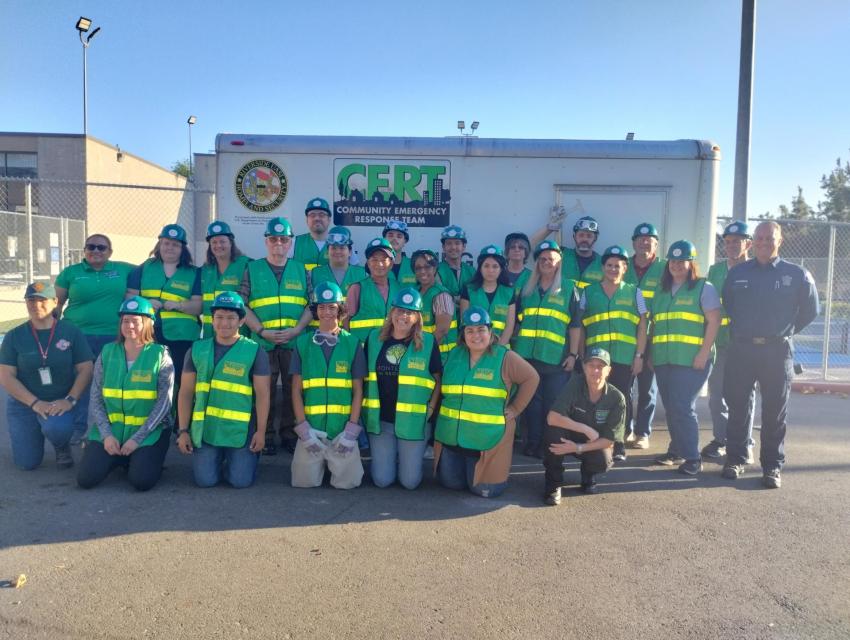
If you’re interested in attending one of the classes, please click on the appropriate link to register.
The Training Covers:
- Disaster Drill and Simulation
- Disaster Preparedness
- Fire Safety
- Fire Extinguisher Training
- Light Search and Rescue
- Hazard Materials Awareness
- Damage Assessment
- Disaster Medical Operations
- Stop the Bleed
- CERT Team Organization
- Disaster Psychology
- Terrorism Awareness
- Emergency Communications
- Access and Functional Needs Awareness
- Disaster Drill and Simulation
The CERT program originated in Los Angeles, California, before expanding across the United States and internationally. In February of 1985, officials from LA traveled to Japan to study its disaster response plans. They discovered that Japan had comprehensive, neighborhood-based training programs focused on fire suppression, light search and rescue operations, first aid, and evacuation.
Following this, the LA group traveled to Mexico City after a devastating magnitude 8.1 earthquake in 1985, which claimed over 10,000 lives. Despite the lack of pre-disaster training, groups of volunteers conducted light search and rescue operations. These volunteers were credited with saving over 800 lives, though more than 100 volunteers tragically lost their lives in the effort.
Recognizing the importance of pre-disaster training, LA officials began training leaders of neighborhood watches in basic skills such as fire suppression, light search and rescue, and first aid. The first team of 30 individuals completed their training in early 1986, demonstrating the effectiveness of the program through drills, demonstrations, and exercises.
CERT Classes
Share this page


Contact
Esther Martinez
Emergency Operations Specialist
35 Cajon St. Suite 12
Redlands, CA 92373