CO2 and the Carbon Cycle
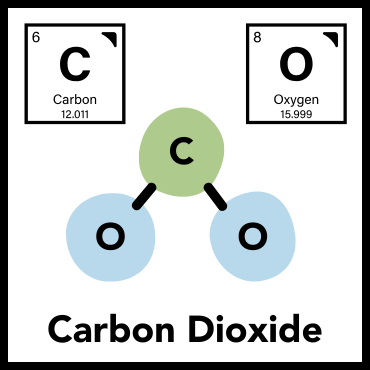
Our planet has a love-hate relationship with CO2, or carbon dioxide. We need CO2 to live, but too much can disrupt our climate. To understand this, we need to understand what carbon actually is.
Carbon
Carbon makes up the food we eat, powers our cars, and, when in the form of CO2, helps our atmosphere hold in heat.
Carbon is so important because it’s used to form all organic compounds, such as plant and animal cells, proteins, carbohydrates, and fats. When carbon is combined with oxygen, CO2 is formed.
Carbon is naturally stored in minerals and soil in the Earth’s crust, the atmosphere, plants and animals, and in oceans. Carbon is also stored in dead biological material from millions of years ago deep underground. This is where we get crude oil, which is used to make gasoline.
Carbon is constantly moving through our planet via the carbon cycle.
The Carbon Cycle
The carbon cycle is an extremely intricate process that powers all life on Earth. But here are some quick fundamentals of the process.
- Plants use the CO2 in the air for photosynthesis.
- When human bodies break down food for energy, CO2 is released through our breath.
- When plants and animals die, CO2 is released in the decomposition cycle.
- Oceans absorb CO2 through phytoplankton’s photosynthesis cycle.
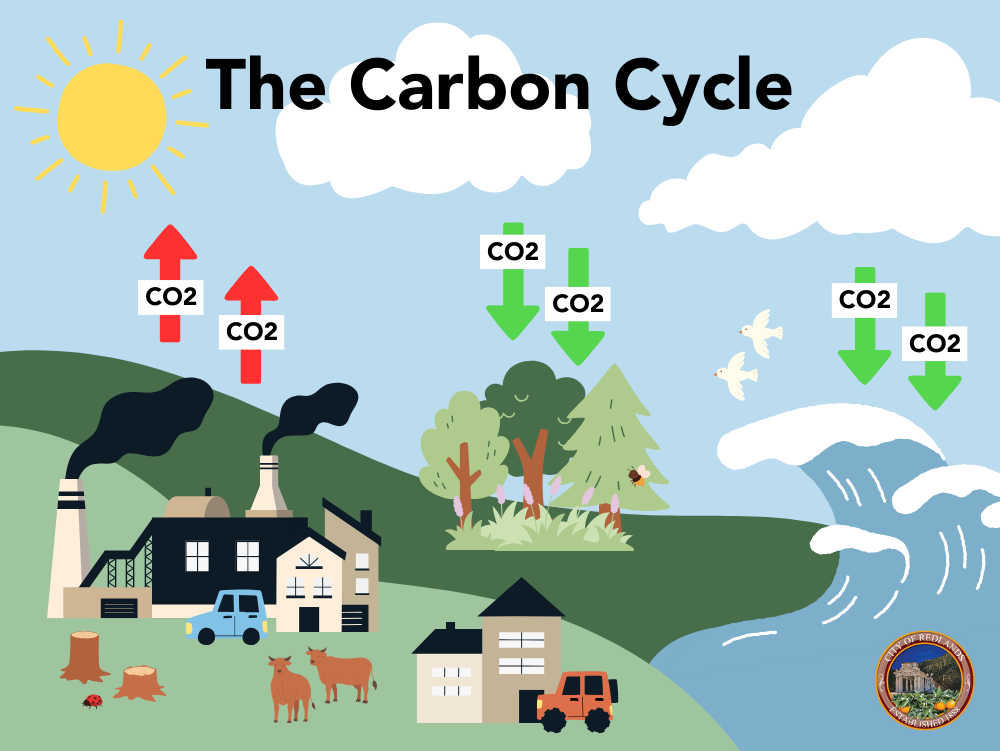
Humans also generate CO2. We generate so much CO2, that the natural carbon cycle can’t keep up. Excess CO2 in the atmosphere holds more heat, warming the planet. CO2 is a greenhouse gas that contributes to climate change.
Other greenhouse gasses, or GHGs, include methane, nitrous oxide and fluorinated gases, like chlorofluorocarbons (CFCs). These gasses have a much higher warming potential in our atmosphere than CO2.
Because these gasses hold heat, they warm our atmosphere. Excess GHG emissions cause excess warming. Warming disrupts our weather and climate. Reducing GHGs is the main solution to fighting climate change.
Share this page


