Mills Act Program
Historic Preservation Contract
The City of Redlands invites applications from property owners to participate in the city’s Mills Act program, designed to encourage the preservation of historic properties in Redlands.
About
The Mills Act Program is an economic incentive program statewide in California for the restoration and preservation of qualified historic buildings by private property owners. Participation by the City in the California Mills Act Program was approved by the City Council on November 20, 2012.
What can be included?
The focus of the program is preserving, maintaining, and/or restoring the significant features that define the historical character of the property (such as structural and architectural elements). The property owner promises to do work that will not detrimentally affect the architectural, historical, or aesthetic integrity of the property.
As part of the Mills Act Contract application, you (or you may hire a consultant) will need to prepare a Ten-Year Work Plan that shows how your property tax savings will be directly invested in maintaining, preserving, or restoring the significant contributing aspects of the historic resource. You may also meet with staff to informally review your anticipated Work Plan.
Some typical types of building elements that are usually eligible to be included in the Ten-Year Work Plan are:
- Foundation (including seismic retrofit)
- Roofs, awnings, and balconies
- Exterior siding, paint, and finishes
- Exterior windows, doors, and trims
- Porches, patios, and exterior stairs
- Code-required repairs or replacements (e.g., knob & tube wiring)
- Other documented contributing elements unique to the property (e.g., rock wall)
Other types of expenses that may be eligible for reimbursement (that may not be listed in the Ten-Year Work Plan) include: any related building permit application fees or inspection fees (directly related to the maintenance or restoration work); and other City application fees such as for a Certificate of Appropriateness or other Planning permit.
Some types improvements or property elements that are usually NOT eligible for the Ten-Year Work Plan include:
- Fences, walls, or gates
- Walkways or lighting
- Rear yard landscaping
- Grading or drainage improvements
- Non-contributing elements not related to historical preservation of the structure or house
- Interior work such as remodeling or aesthetic improvements (e.g., upgrades or remodeling to a kitchen, bathroom, living room, bedroom, etc.)
- New interior flooring, paint, wallpaper, countertops, cabinets, fixtures, etc.
- Replacing appliances, HVAC systems, duct work, water heaters, insulation, etc.
- Maintenance costs such as paying a gardener, utility bills, insurance bills, etc.
California Mills Act Program
The California Mills Act Program was first enacted in 1972, and grants participating cities and counties the authority to enter into contracts with owners of qualified historic properties who actively participate in the rehabilitation, restoration, preservation, and maintenance of their historic properties. Since the costs of doing so can be high, and ultimately have the effect of prohibiting preservation activities, property tax relief can offset these costs. Thus, the Mills Act program is offered as a strong incentive for property preservation work.
Additional information about the statewide program is available from the State Office of Historic Preservation, Mills Act Program website (click here), or go to www.ohp.parks.ca.gov for the California Office of Historic Preservation.
Property Tax Savings
Property taxes are recalculated using a formula in the Mills Act and State Revenue and Taxation Code. The typical property tax savings for residential properties with a Mills Act contract (in Redlands) is around 60 percent. The County Assessor is responsible for determining the new property value after the Historical Property Contract has been recorded. The full amount of the tax savings received by the property owner must be used to finance the preservation, maintenance, or restoration of the property’s character-defining features or elements.
Example for a single-family residential property:
Assessed value by County Assessor (before Mills Act)*: $ 600,000
Typical property taxes paid (e.g., effective rate 1.2%): 7,200
Historical (Restricted Use) value with Mills Act contract*: 250,000
Reduced annual property tax payment (e.g., rate of 1.2%): 3,000
Therefore, the property tax savings is equal to $4,200 ($7,200 minus $3,000 = $4,200).**
* Note that the assessed value may increase slightly each year (such as 2.0% annually), which can result in a slightly higher property tax payment, and therefore the property tax savings (i.e., your expenditure amounts) may need to increase slightly each year.
** The annual cumulative expenditures on projects to maintain, preserve, or restore the property must meet or exceed the annual tax savings amount. Contact staff to discuss and develop an appropriate Ten-Year Work Plan.
If a property owner defaults on the terms or conditions, the City may choose to not renew the contract or cancel the contract. If a notice of non-renewal is exercised, then the contract will run its term and expire after 10 years.
If a notice of cancellation is exercised (for immediate termination of the contract), then the owner would be subject to a cancellation fee which would be an amount equal to 12.5% of the current fair market value of the property (the County Assessor’s Office would immediately evaluate the property to determine its current fair market value).
Eligibility
The eligibility and program guidelines include:
- Property must be located in the City of Redlands.
- Property must be privately owned.
- The property is not currently exempt from taxation.
- The property is listed in a Federal, State or City official register pursuant to Calif. Gov. Code 50280.1.
- To view the City’s current List of Designated Historic Resources:
https://www.cityofredlands.org/post/historic-preservation (click on Documents and Resources) - If the property is not currently designated as a historic resource, then an additional application may be processed concurrently to have the City Council approve its designation as a local historic resource, and thereby make the property eligible for a Mills Act Contract. The criteria for local designation are listed in RMC Section 2.62.170 (click here).
- To view the City’s current List of Designated Historic Resources:
- The property is currently in good condition (not dilapidated) and its character-defining features are being maintained.
- The property is a good example of architectural, historical, or aesthetic integrity.
- Significant features that define the historical character of the property and its buildings have not been destroyed or can be restored based on documentary, physical, or pictorial evidence.
- The owner of the property proposes to make significant improvements to the property that will not impact the architectural, historical, or aesthetic integrity of the property.
- The property owner agrees to enter into a 10-year contract (with automatic annual renewals), and have the contract recorded with the County Assessor.
- The property owner agrees to submit documentation every year to the Planning Division that allows the City to conduct an annual review of the work completed and verify compliance with the contract.
Review and Approval Process
After filing an application for a Mills Act contract and all necessary information has been submitted, the application will be reviewed by the city’s Historic & Scenic Preservation Commission for a recommendation to the City Council. The City Council would then hold a public hearing and make a final decision on the Mills Act contract. Overall, the process typically takes about 3 to 4 months (due to the preparation and lead time necessary for public hearings).
The City may approve up to seven (7) applications per year, consisting of five (5) residential properties and two (2) commercial properties.
Currently, there is no valuation limit for single-family properties. The City Council removed the previous restriction (valuation not to exceed $1 million) when they updated the program requirements in 2019 (Resolution No. 7947).
Each contract that is approved will include a term of ten (10) years. At the end of each year, it will renew automatically and add one year (for an on-going length of 10 years).
Annual Reporting
Each property owner with a Mills Act contract will be required to prepare and submit an annual report to verify compliance with their contract. The annual report assures that the property is meeting its obligations to implement the 10-Year Work Plan included in the Mills Act contract.
Annual Report fillable form – Mills Act
Hint: Download and save the template to your desktop first, then begin completing the document. Fields shown outlined in Red are required fields and must be completed.
What information is required?
The Annual Report must include the following:
- Detailed description of the improvements completed during the previous 12 months;
- Photo documentation of work completed during the previous 12 months (Before & After);
- Copy of all receipts and checks (i.e., proof of payment) for improvements to verify all costs expended during the previous 12 months; and,
- Copy of applicable tax statements (Assessment Notice and the Tax Collector Bill).
Note that evidence of proof of payment is required (not initial estimates or unpaid invoices). If evidence of proof of payment and description of the work completed are not provided, then those amounts will NOT be included or counted toward your obligation. Assumptions about costs or estimates are not sufficient proof of expenditures for purposes of contract compliance.
When is the Annual Report due?
Annual reports must be submitted to the Planning Division no later than the last business day in July each year. Annual reports may be dropped off or submitted to the city’s Planning Division, to the attention of the Historic Preservation Officer.
The fillable form above is provided for your convenience, and can be downloaded to your desktop (before completing the form). If you have any questions about the format or content required for the Annual Report, please contact the planner at the One Stop Permit Center at (909) 798 – 7551 extension 3.
Application Form
Click here to download the Mills Act Application
The application form is available online as well as at the Planning Division public counter at the One Stop Permit Center (click here) located at 35 Cajon Street, Suite 15-A, in the Redlands Civic Center. The form available for download (click on link above) includes fillable boxes and formulas to assist applicants with completing the form. The application fee is $1,160.00 (click here for the Fee Schedule).
Mills Act applications are accepted throughout the year. The only limitation on annual approvals is that the City Council may approve a maximum of seven (7) applications per year, consisting of five (5) residential properties and two (2) commercial properties.
You may contact Planning Division staff prior to filing the official application, and refine or clarify any items regarding your proposed 10-Year Work Plan. For further information or if you have any questions, please contact the planner at the One Stop Permit Center at (909) 798 – 7551 extension 3.
Examples
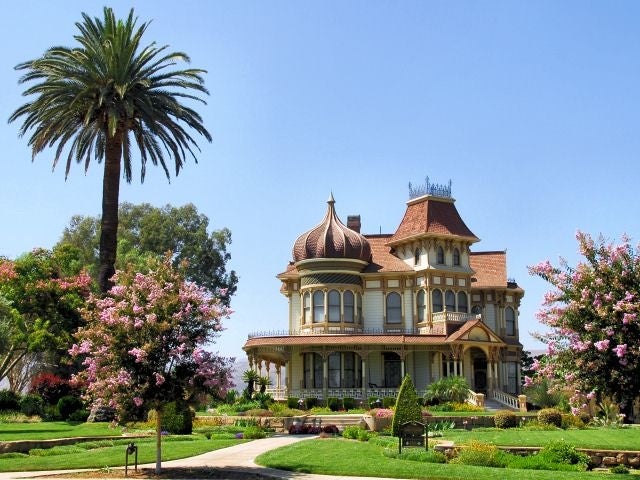
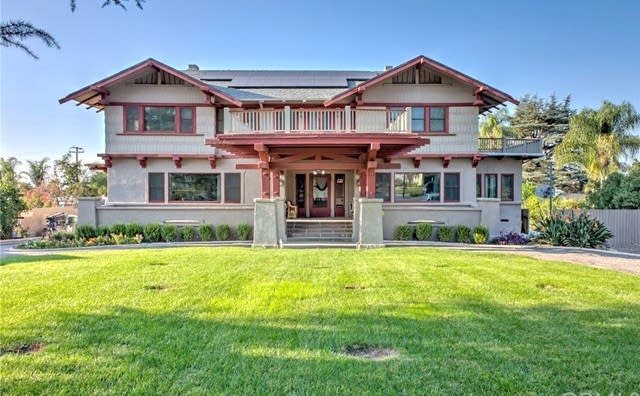
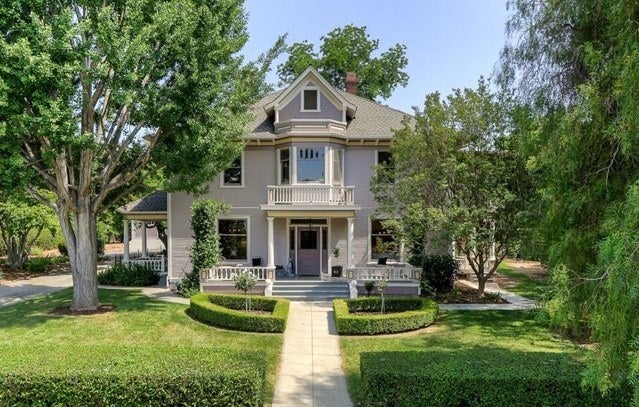
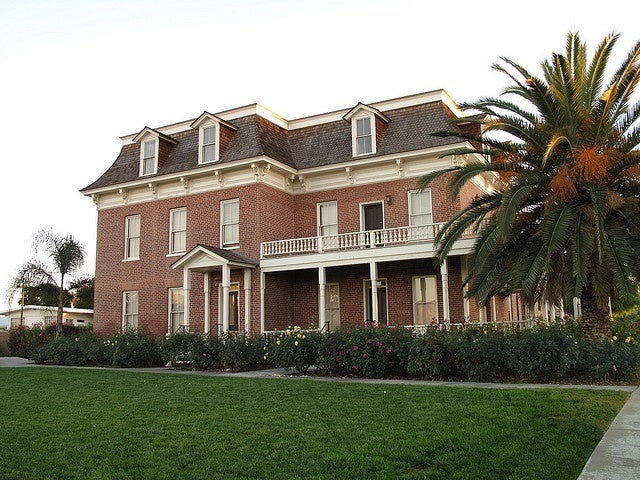
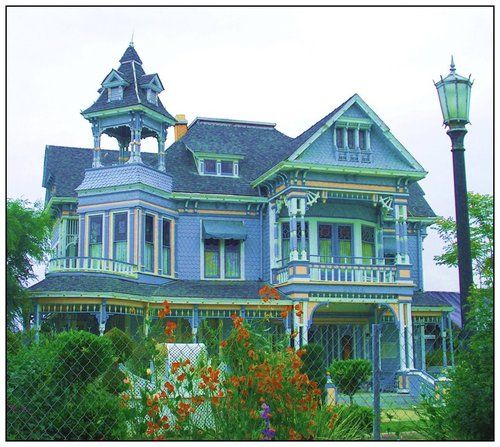
Typical properties in Redlands that could take advantage of the Mills Act Program include the following.
Sample Contract
Share this page


