Native Plants in Redlands
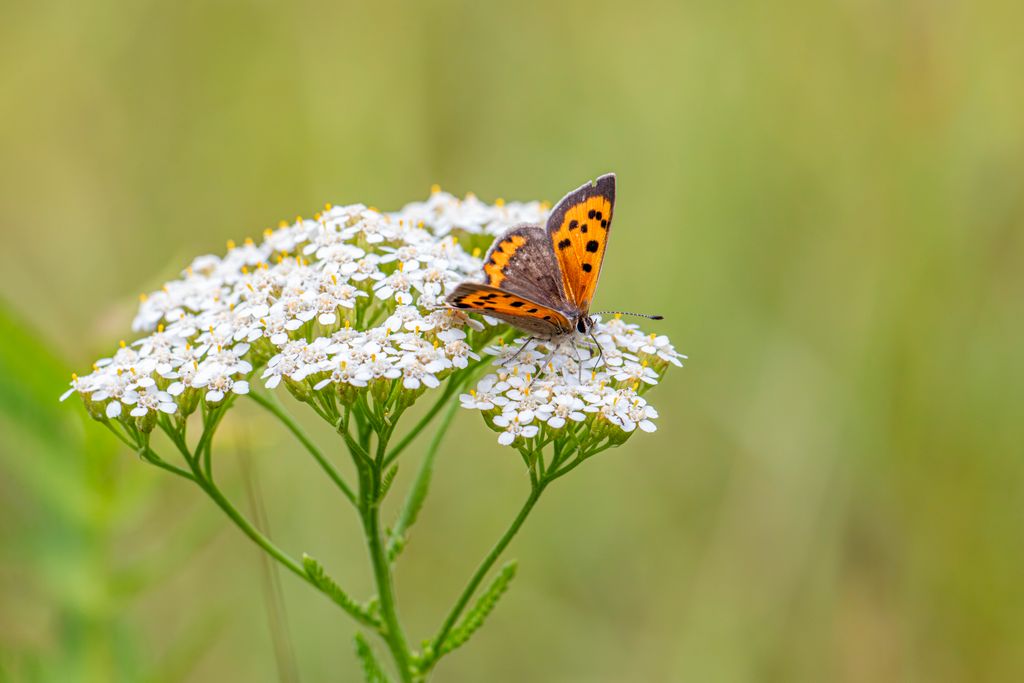
Native plants are well adapted to Southern California’s water availability, local temperature ranges, and soil conditions. These plants play an important role in the local food web and support a healthy ecosystem.
Native plants’ unique ability to thrive in Redlands makes them great for landscaping. They naturally require less water and maintenance. The City of Redlands Water Conservation team provides many resources on native and drought-tolerant landscaping.
On the other hand, invasive non-native plants can harm the local environment. For example, some non-natives, like mustards, dry out quickly and take over vast areas of land, creating massive amounts of continuous fuel for wildfires. Remember, no plant is fire-proof, but you can make your garden more fire-safe. Check out this guide on fire-smart landscaping.
This article was made possible by local native plant experts, Elizabeth Richards and Mana Saldanha, and the Redlands Conservancy. The Redlands Conservancy helps protect and preserve the city’s 28+ miles of rural and public trails, and 560 acres of conserved natural open space. Redlands Conservancy works to restore native vegetation, clears the trails of weeds, repairs damage from erosion and use, and prepares maps and way-finding signs.
All trails are open to the public at no cost everyday, dawn to dusk. Look out for these native plants while exploring local trails and beyond.
Native Species
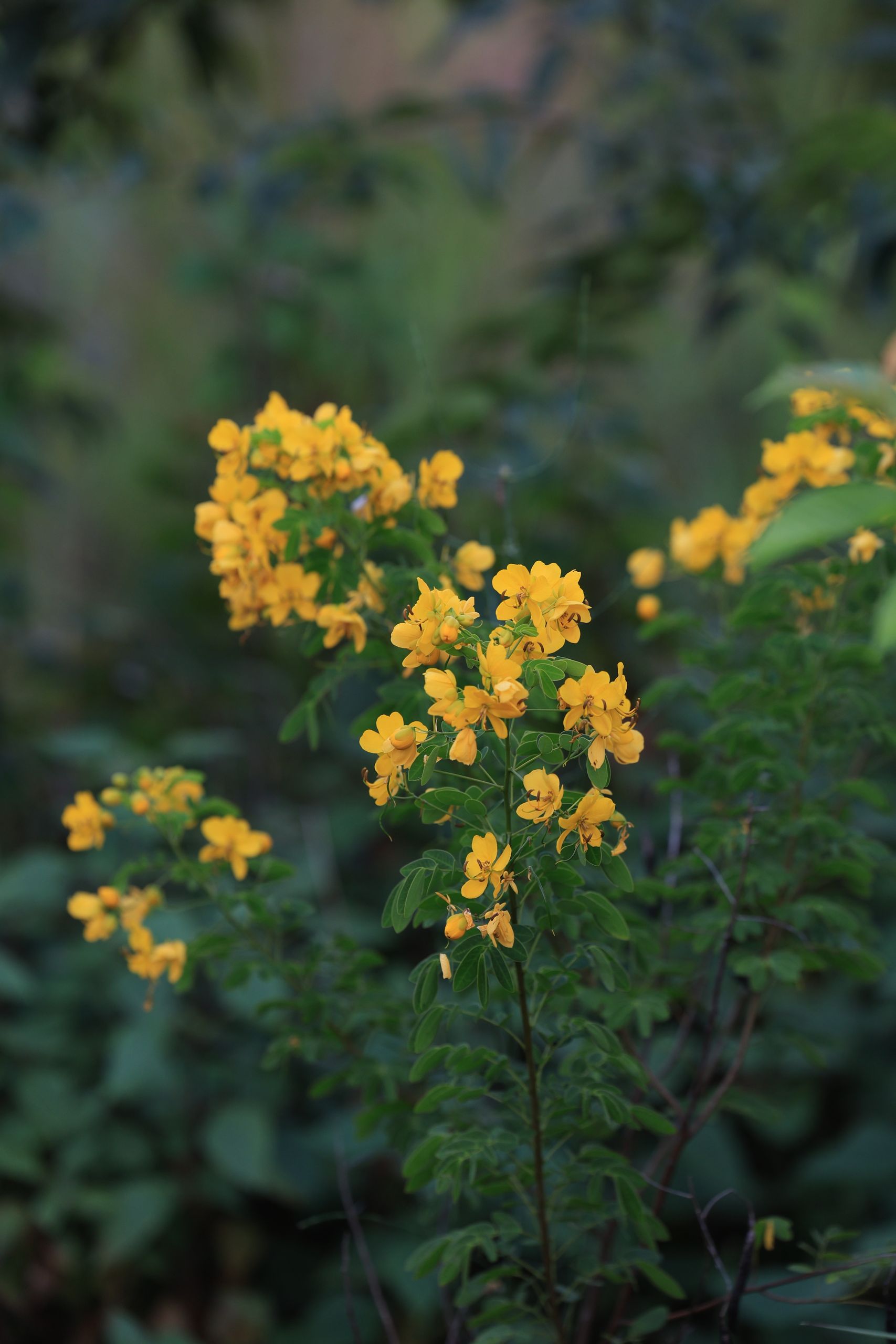
Bladderpods are an easy to grow shrub with flowers year-round and minimal water needs. It is a tough plant that does well even on south-facing slopes or tough soil conditions. The flowers attract hummingbirds, bees, and butterflies.
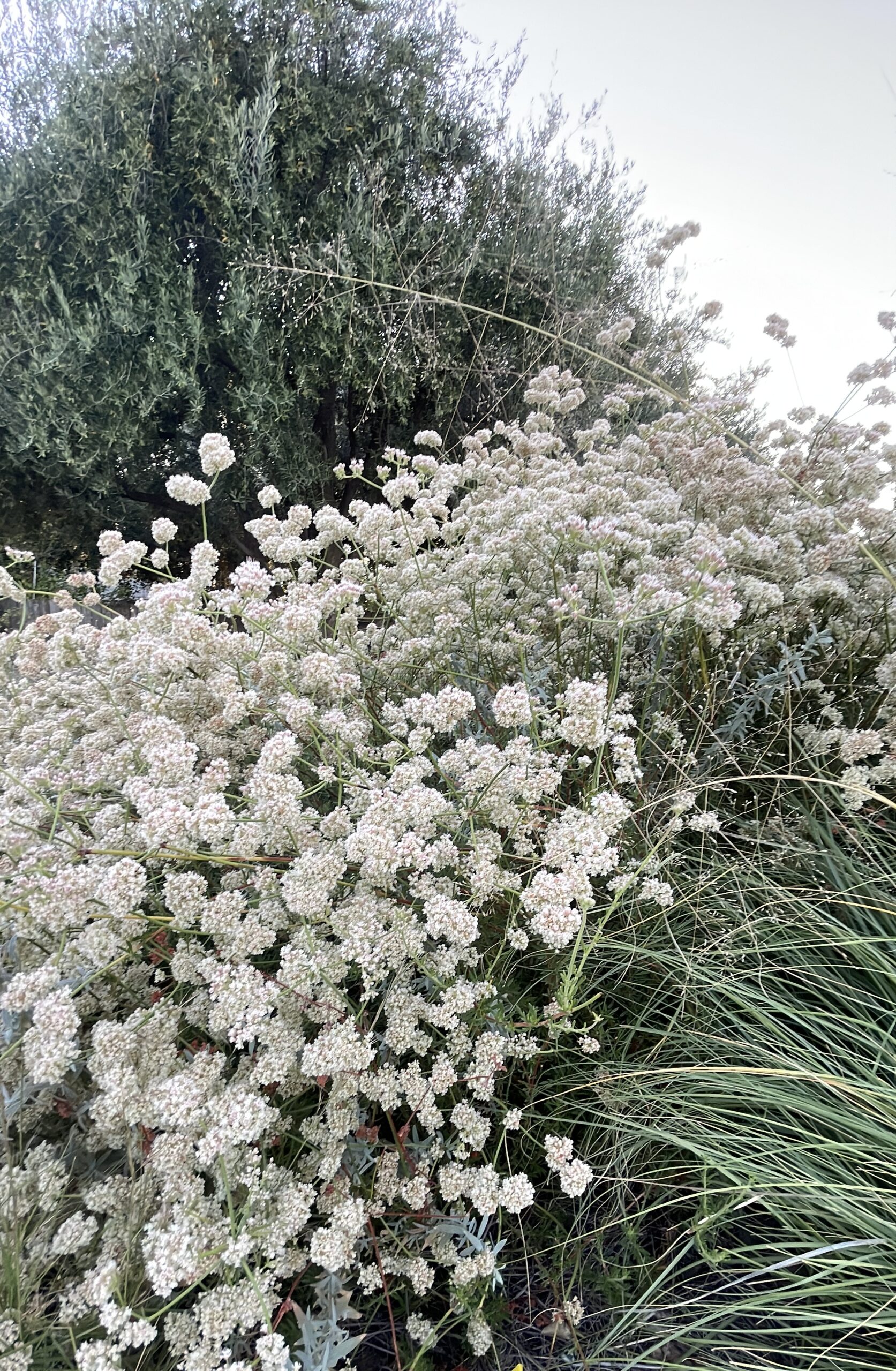
Considered a super pollinator, the California buckwheat needs full sun and has very low water needs. Its flowers look like pom-poms suspended in the air. These will gradually change color from white to light pink and then maroon.
Catalina, one of the tallest varieties, can reach up to 3 feet tall. Fuchsias are one of the few plants that blooms throughout the summer. Thrives in full sun and has low water needs. A hummingbird favorite!
Cleveland Sage is an important plant for local pollinators and birds. It requires very little water once established. Many cultivars of this sage can be found in nurseries for purchase.
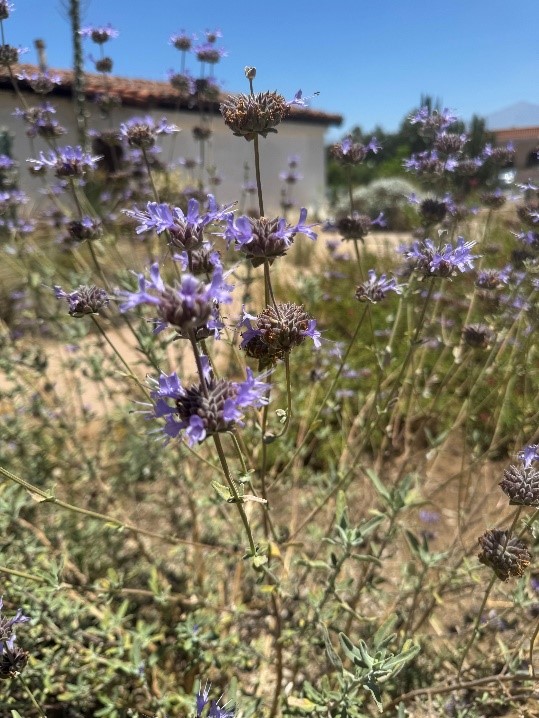
These are easy to grow, durable plants that can be used as a lawn replacement ground cover or in a flower bed. It is great for attracting butterflies and birds to your garden. It has low water requirements.
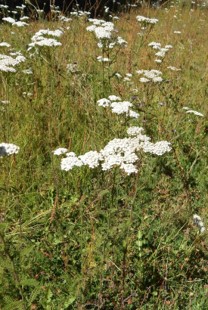
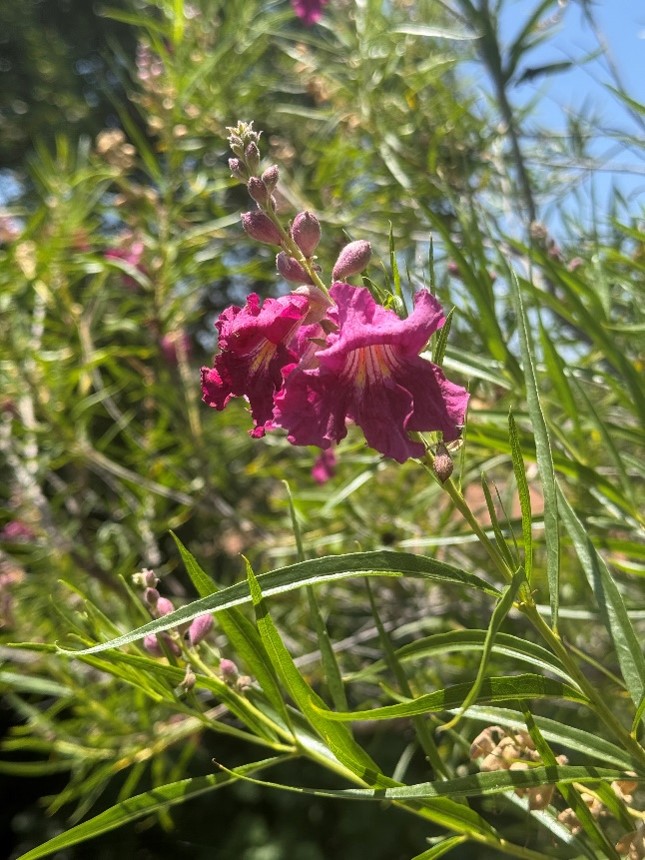
The Desert Willow is a small multi-trunk tree that is beautiful through the spring, summer, and fall with flowers in shades of lavender, pink, and white. It attracts pollinators including hummingbirds, bees, and butterflies.
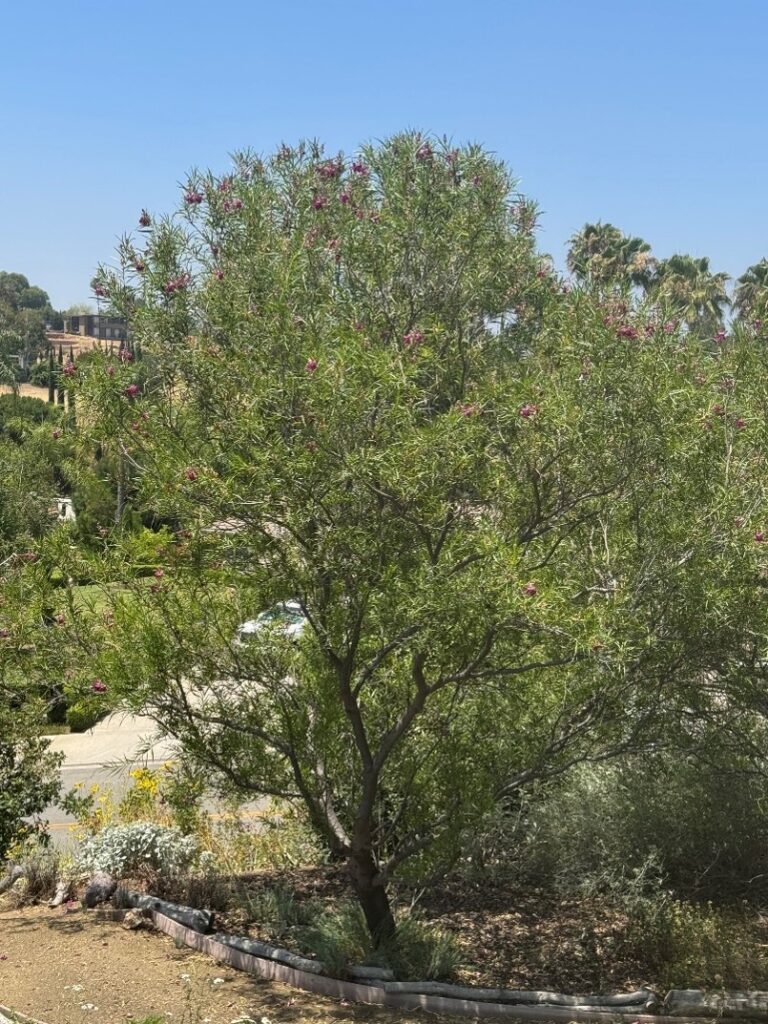
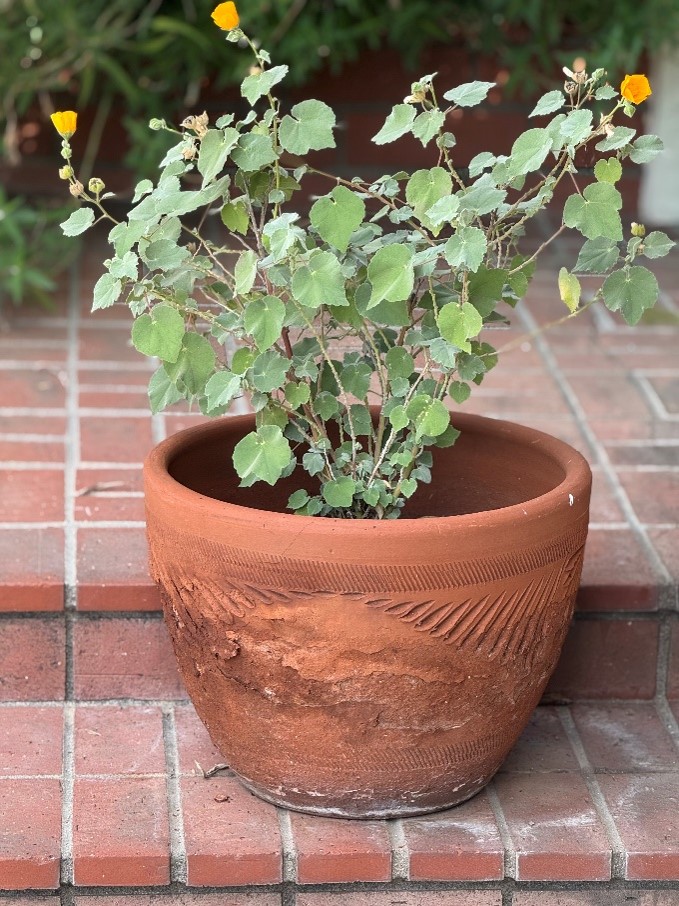
This plant does well when planted in the ground or in a container. It is a tough plant that is easy to grow and requires little water in the dry season.
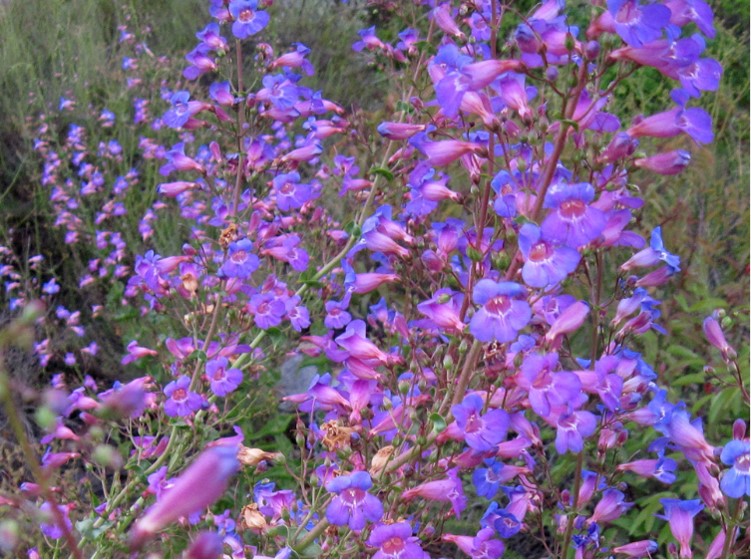
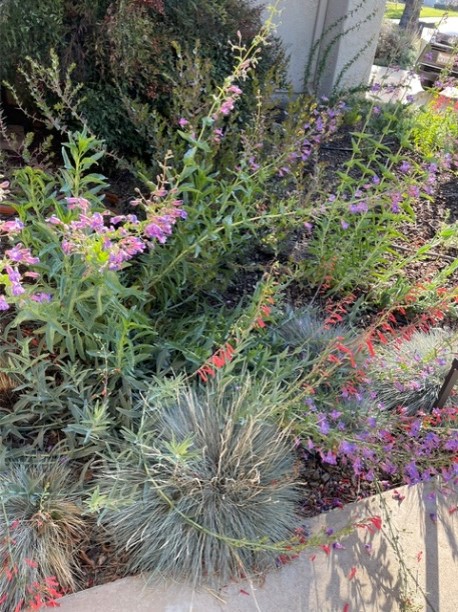
This variety has purple tubular flowers and can reach up to 6 feet tall with more than 30 flowers per stalk. The flowers are loved by pollinators and hummingbirds. Grows in full sun, and has low water needs.
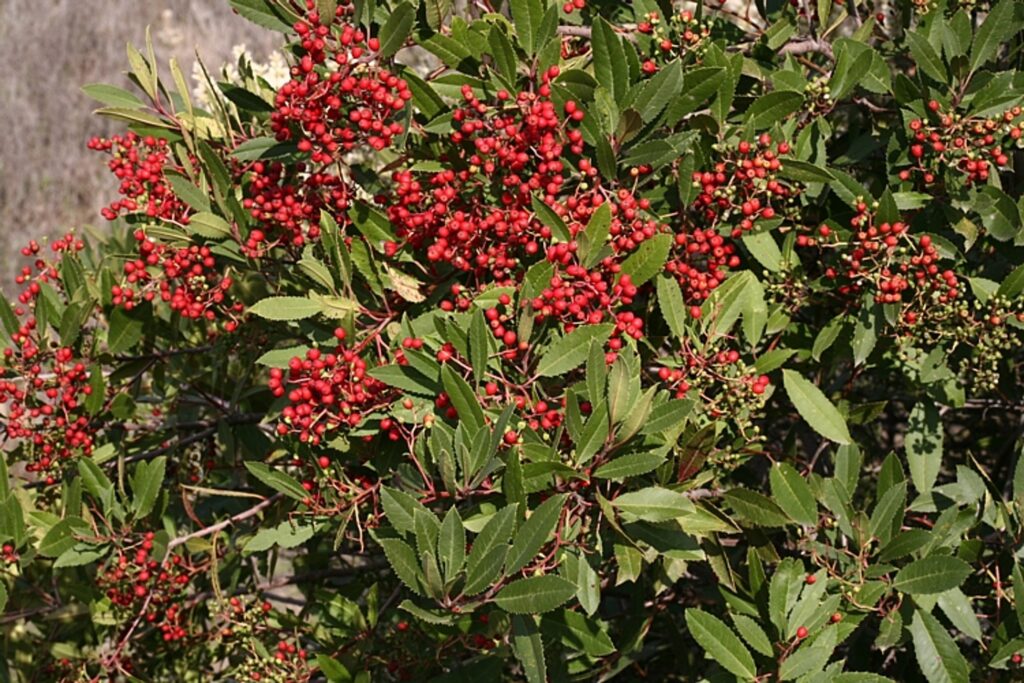
Toyon is a beautiful large shrub that is easy to grow. It produces white flowers in the summer and is covered by orange/red berries in the winter that are eaten by birds. It is very drought tolerant once established.
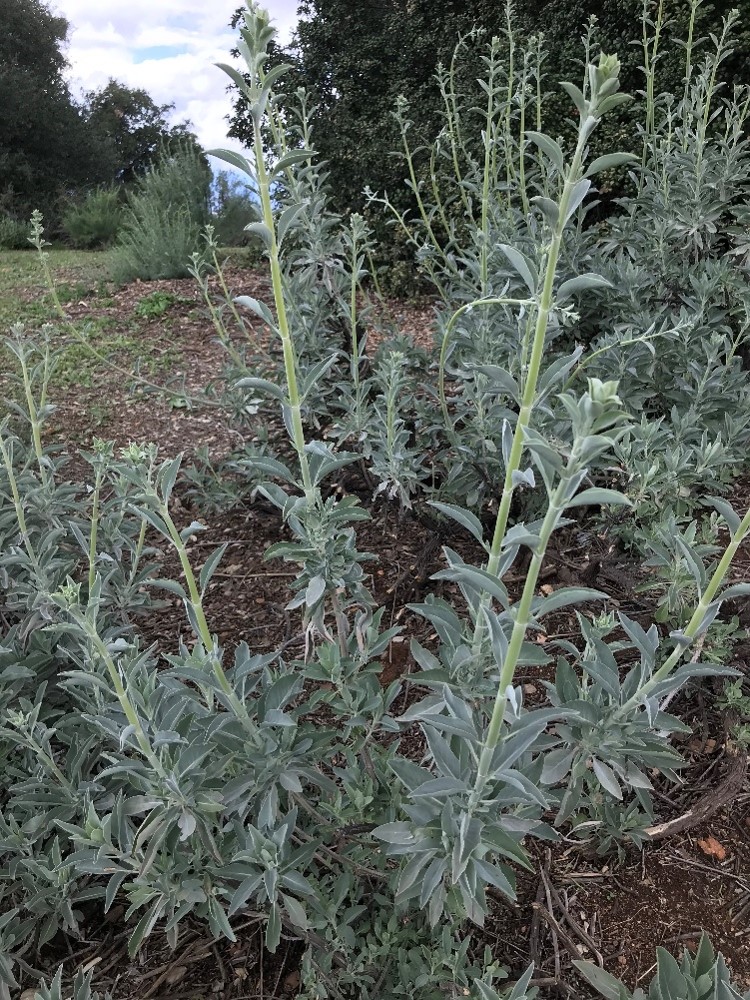
A wonderfully fragrant perennial shrub that grows with little to no summer water in Redlands. In the spring, white sage shoots up many stalks of white flowers with lavender streaks. It is a favorite among hummingbirds and pollinators.
Residents may also come across the following invasive species. These can harm the natural environment by out-competing native plants. This reduces the region’s biodiversity and can create large monocultures. Monocultures work as a continuous fuel source for wildfires. They can also increase a wildfire’s rate of spread due to the lack of natural fire breaks.
Avoid the following plants in landscaping. When removing these plants, they should be placed in the trash—not the green bin. Materials from residential green bins are composted and mulched. Seeds from invasive plants will survive this process and spread to wherever the compost or mulch is applied.
Invasive Species
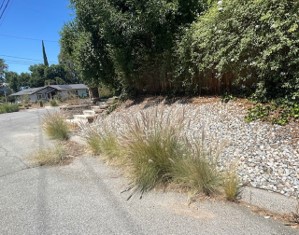
This is a bunchgrass from Africa that is considered highly invasive. It is quick to spread to its vicinity and beyond, outcompeting other plants. It is commonly sold in nurseries.
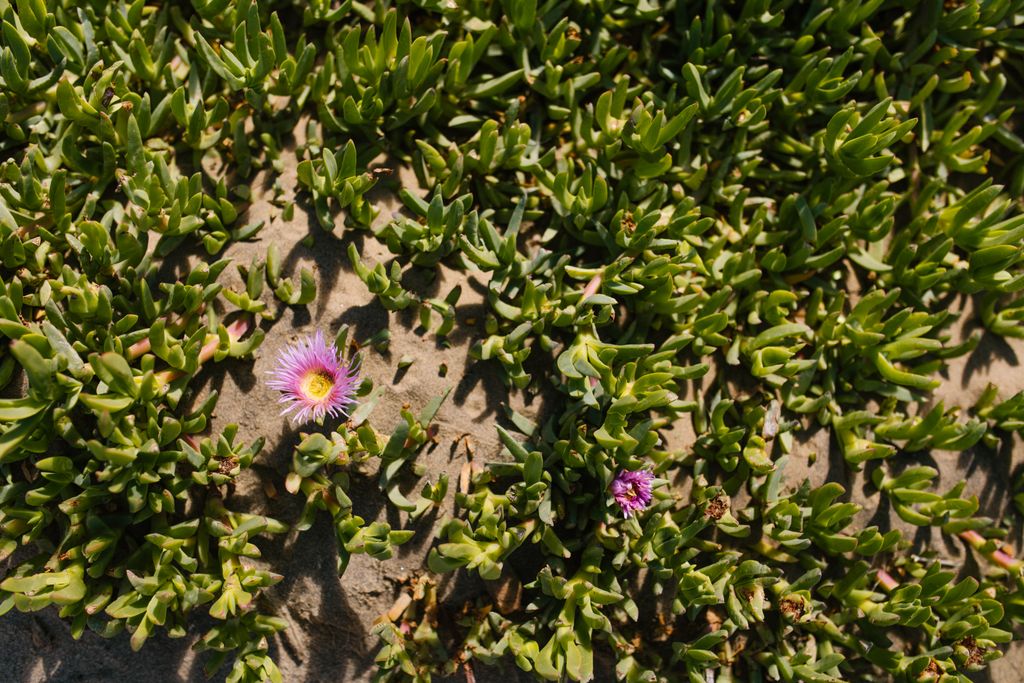
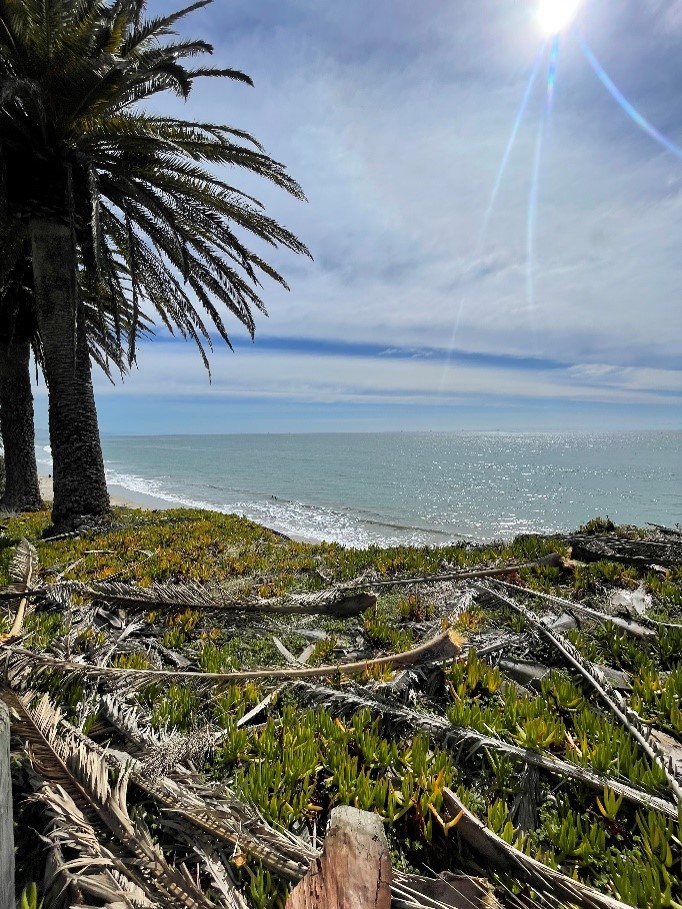
Iceplant is found all over Southern California. It is native to South Africa. These plants take over massive swaths of land and outcompete surrounding local plants. It also grows in a massive web that suppresses all plants beneath it. These plants have even evolved to store salt in the soil, making inhabitable conditions for other plants once they’ve been removed. Iceplant can be easily pulled from the ground. Once collected, it should be bagged and placed in the garbage, not green waste. Iceplant is very common at California beaches and has unfortunately become an iconic feature of the coastline.
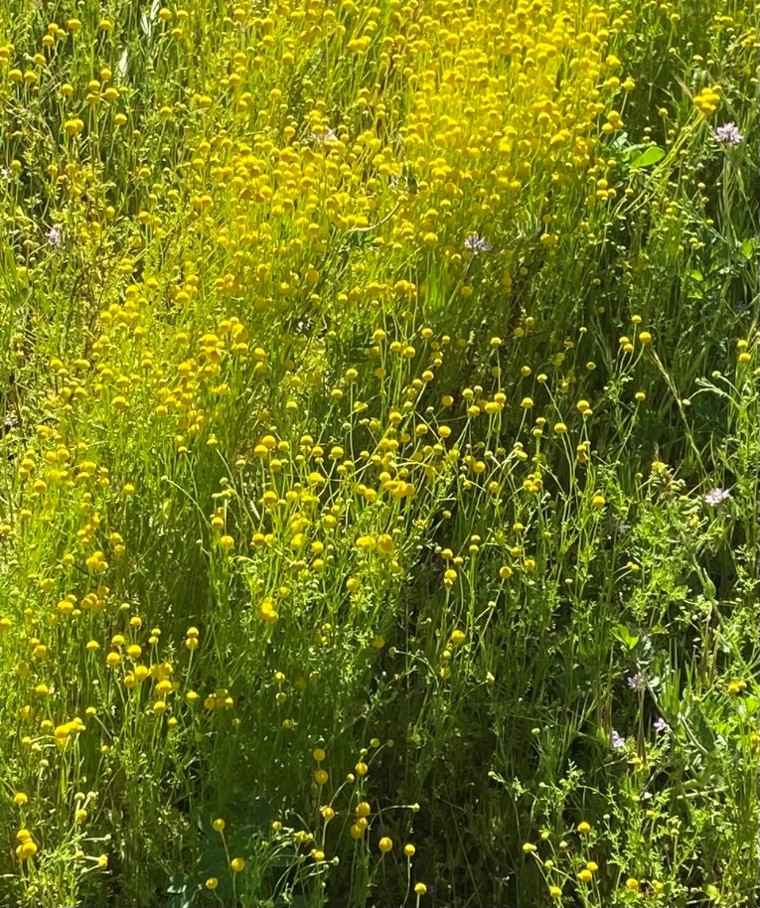
These pretty yellow plants are a highly invasive annual weed that is aggressively spreading through Southern California. In summer, the plants dry out and become highly flammable. When found, remove it, bag it, and discard it in the regular garbage.
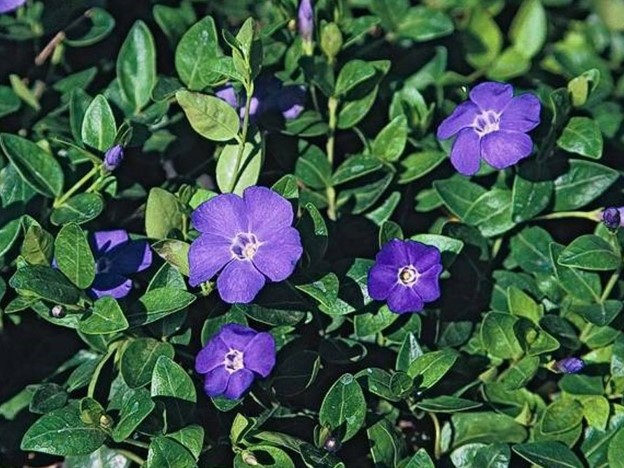
This common purple flower is native to Europe. In Southern California, it’s known to escape garden beds and spread to wild areas. It disrupts native plant communities and lowers biodiversity. Don’t buy it and don’t plant it. When removed, bag it and discard it in the regular garbage.
Share this page


