The Circular Economy
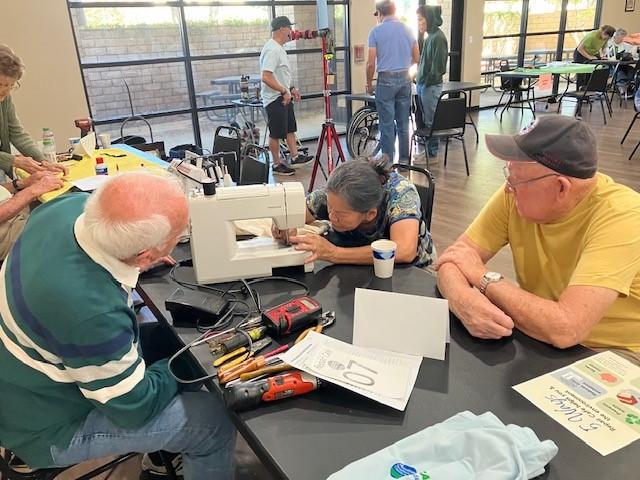
One of the best ways to lessen environmental impacts is by demanding less from the planet.
We currently live in a somewhat linear economy. Some refer to this as a ”Take – Make – Waste” system. In a linear economy, we take what we want from the planet, use it, then throw it away. A liner economy is not sustainable and will eventually result in depleting all of our planet’s resources and results in excess waste.

We can shift the liner economy to be more circular. The circular economy emphasizes reducing, reusing, and recycling. This system results in resource conservation and waste reduction, ultimately putting less demand on the planet.
In reality, we live in a world that mixes both linear and circular structures. Let’s use those circular parts to our advantage. By putting more demand on this system, we are telling manufacturers and decision-makers that this is what consumers want.
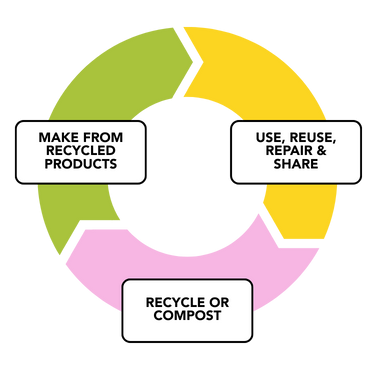
We can incorporate more circular patterns by following the six Rs.
The circular economy is specified in measure SW-2f of the CAP.
“SW-2f: Work with ANCA, schools, local art groups, and businesses to expand neighborhood-scale programs that support a circular economy by encouraging reuse to reduce waste generation, such as creative reuse workshops or community exchange programs.”
Share this page


